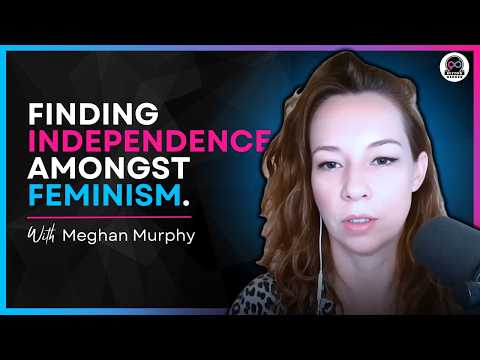
Meghan Murphy
Feminist journalist and founder of Feminist Current
Meghan Murphy built Feminist Current into one of the most consequential — and contested — voices in gender-critical feminism. In her conversation with Stella O'Malley, Mia Hughes, and Dr. Bret Alderman, she traces the arc from insider to outcast: the podcast collective that pushed her out, the publication she built in response, and the Twitter ban that made her a test case for the new rules of political speech.
Meghan Murphy founded Feminist Current in 2012, building it into one of the most widely read — and fiercely argued over — gender-critical feminist publications on the internet. Before that, she had been part of a podcast collective that eventually pushed her out, an early signal of the ideological fault lines that would define the next decade of feminist politics. Her writing on prostitution, pornography, and gender ideology had put her at odds with the mainstream left long before such positions carried the social costs they carry today.
The cost came into sharpest focus in 2018, when Twitter permanently banned her account after she referred to a trans-identified individual in ways the platform deemed in violation of its hateful conduct policy. The ban made her one of the highest-profile casualties of an evolving content moderation culture and ignited a debate about the limits of political speech on private platforms — a debate that has only grown louder since.
In "Meghan Murphy on Third-Wave Feminism, Cancel Culture, and the Tweet That Got Her Banned," she sits down with Stella O'Malley, Mia Hughes, and Dr. Bret Alderman to work through what those years actually felt like from the inside: the slow estrangement from the left, the institutional pressures that kept peers quiet even when they privately agreed with her, and the specific mechanics of the ban itself. It is a conversation less about ideology in the abstract than about the social machinery that decides which dissent is tolerable.
What makes Murphy a compelling guest on Beyond Gender is the sheer length of her public record. She has been making the same core arguments for well over a decade, which means the conversation can move past first principles into the harder questions: what did the left lose by drawing this particular line, and what does it cost to hold a position that your own political tribe considers unspeakable?